River Birch
Scientific name: Betula nigra · Native
Location: 35° 45' 10.2"N 78° 47' 33.6"W — Map: 35.752833, -78.792667
How to identify it
River birch trees are most easily defined by their thin, peeling bark that curls away from the trunk. Wonderful cinnamon, reddish-brown and tan bark color. Leaves are Triangular-shaped with prominent veins and serrated edges. Leaves turn a wonderful yellow in the fall. In early Spring, watch out for long slender yellowish-brown clusters of seeds hanging from the branches.
Interesting fact
River Birch is one of the few birch species that naturally thrives in hot, humid climates. These trees can also tolerate wet soil and standing water, which makes it perfect for planting along streams.
Ecological / wildlife value
While River Birch trees provide wildlife value, the ecological value it provides enhances streams and floodplains across eastern North America. Their root systems play a major role in erosion control keeping sediment from entering our freshwater streams.
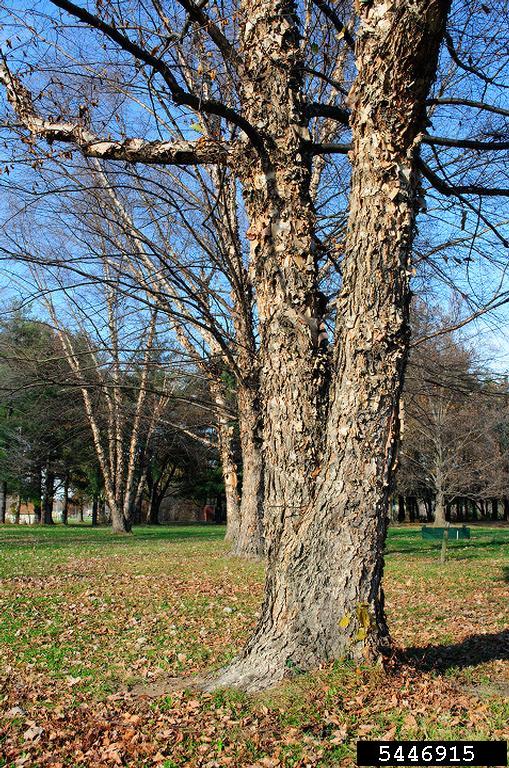
*River birch trunk close-up showing peeling bark. Photo: Vern Wilkins, Indiana University, via Bugwood.org. CC BY-NC 3.0 US (non-commercial). *